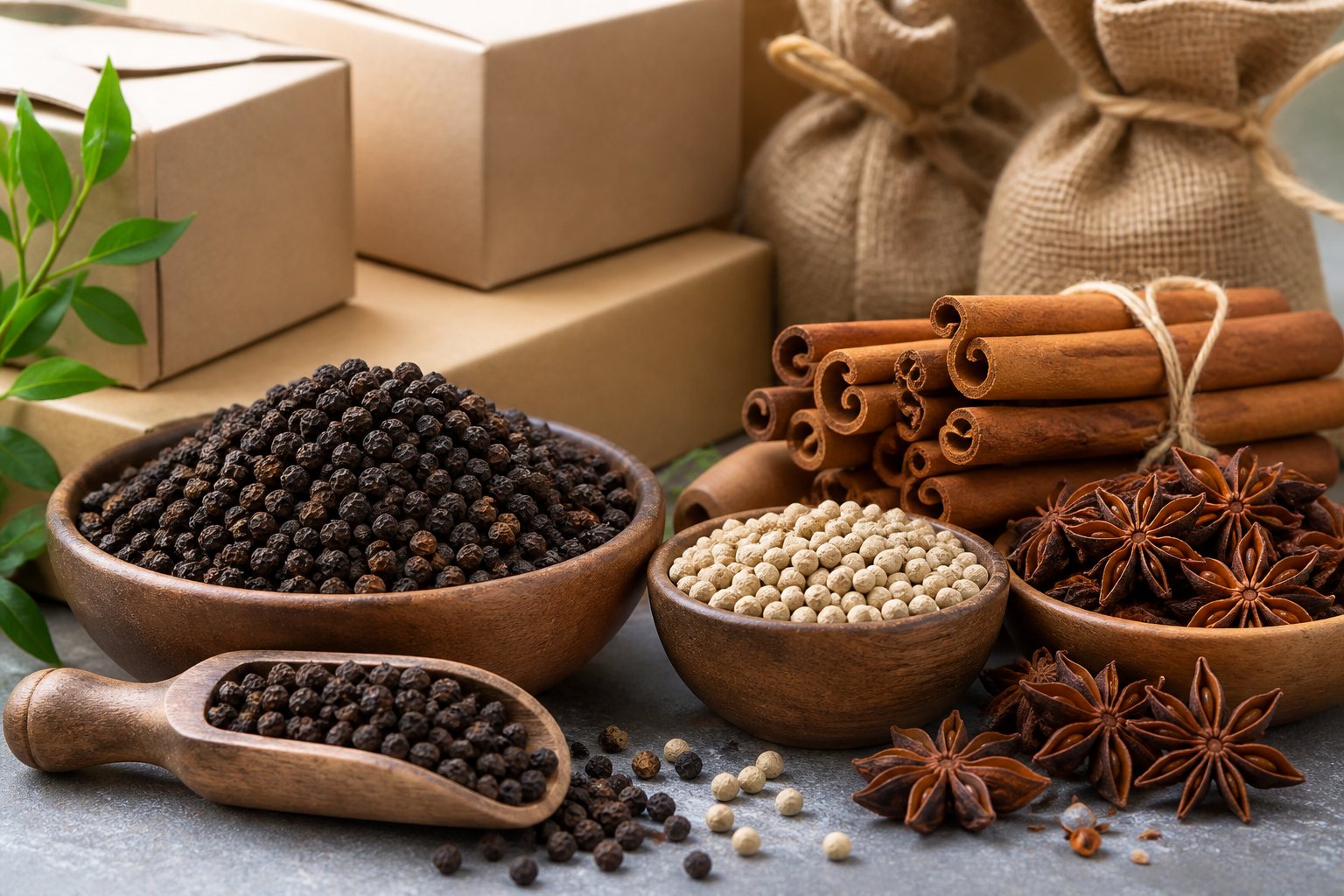
Vietnam black pepper sourcing is a practical opportunity for spice importers, seasoning brands and food manufacturers in 2026. Vietnam remains a leading origin for black pepper and white pepper, but buyers should compare suppliers by density, microbiology, pesticide residue expectations, treatment method and export document readiness, not price alone.
Green Tech Agri Export works as a Vietnam-side sourcing representative for overseas buyers. We help importers clarify specifications, screen suitable Vietnamese suppliers, prepare supplier-ready RFQs and communicate practical questions before samples or commercial orders.
Why Vietnam black pepper sourcing matters in 2026
VietnamNet reported that Vietnam exported about 168,800 tons of pepper worth US$1.1 billion in the first seven months of 2026. The United States was the largest single destination, buying around 41,500 tons worth US$299.3 million in that period. VietnamPlus also reported that first-half 2026 pepper exports reached 145,686 tons with revenue of US$940.5 million.
For buyers, those numbers show that Vietnam black pepper sourcing is still supported by deep export experience. At the same time, tight raw material supply and changing food safety expectations mean importers need a clearer sourcing process. A buyer who only asks for “best black pepper price” will receive offers that are hard to compare.
Key specifications for black pepper buyers
A professional Vietnam black pepper sourcing request should define the intended use. Seasoning brands, food service distributors, spice grinders and industrial food manufacturers may all need different specifications even when the product name looks similar.
| Specification item | Common buyer request | Why it matters |
|---|---|---|
| Density | 500 GL, 550 GL, 570 GL or buyer-specific grade | Density affects quality perception, pricing and final product use |
| Form | Whole black pepper, ground pepper, white pepper or mixed spice | Different processing lines and food safety controls may apply |
| Moisture | Typically controlled by supplier and verified by COA or lab test | High moisture raises storage and quality risk |
| Microbiology | Total plate count, yeast, mold, E. coli, Salmonella and buyer-specific limits | Critical for food manufacturers and retail spice brands |
| Treatment | Steam treatment, cleaning, sterilization or untreated product | Affects microbiology, aroma and destination-market acceptance |
| Residue expectation | Pesticide residue tests based on destination market | Important for EU, USA, Japan and high-standard retail buyers |
550 GL black pepper: what importers should ask
Many buyers use 550 GL as a familiar reference grade, but that is not enough for a complete RFQ. When asking for 550 GL black pepper from Vietnam, importers should also define whether they need cleaned product, steam-treated product, bulk bag packing, retail-ready packing, lab testing and shipment documents.
- Confirm density and tolerance: ask whether the offer is exactly 550 GL or a range around that grade.
- Ask for processing details: cleaned, machine sorted, steam treated, sterilized or untreated.
- Clarify microbiology: define whether the buyer needs a pre-shipment test, COA or third-party lab report.
- Define packing: PP bag, kraft bag, carton, retail pouch or private-label requirement.
- Set destination standards: USA, EU, Middle East, ASEAN and other markets may require different checks.
- Request lot traceability: crop year, packing lot, warehouse condition and export history.
Documents importers should prepare for comparison
Document readiness is a major part of Vietnam black pepper sourcing. Importers should ask suppliers what can be provided before confirming a sample or trial shipment. The document package should be aligned with the destination market and the buyer’s internal quality team.
| Document | Use in buyer review | Buyer note |
|---|---|---|
| Commercial invoice and packing list | Shipment, customs and payment process | Check product name, quantity, packing and HS code consistency |
| Certificate of analysis | Quality and food safety review | Should reflect the offered product and lot where possible |
| Phytosanitary certificate | Plant product import control | May be required depending on destination and product form |
| Certificate of origin | Origin verification and trade terms | Ask supplier which CO form is available for your market |
| Treatment or fumigation document | Destination-market or buyer requirement | Clarify if steam treatment, fumigation or other treatment is needed |
| Halal certificate if applicable | Muslim-market food channel review | Certificate scope matters more for spice blends and retail packs |
Common sourcing risks in pepper purchases
Pepper is a high-value agricultural product, so quality mismatch can be expensive. Common risks include unclear density, old crop mixed with new crop, poor microbiology control, residue issues, vague treatment claims and packing that does not match the buyer’s storage or retail plan.
Buyers should be especially careful with very low quotes that do not state density, treatment method, packing weight, testing plan or shipment term. A clear specification can reduce negotiation noise and help suppliers respond with realistic pricing.
How Green Tech Agri Export supports pepper buyers
We support Vietnam pepper and spices sourcing by helping buyers define grade, quality target, documents, sample plan and commercial assumptions. We can also connect pepper sourcing with related categories such as cashew nuts, coffee beans, soft dried fruits and broader Vietnam agricultural products.
Before sending an RFQ, buyers can review our working process, Vietnam-side sourcing role, sourcing guides and contact page. We position Green Tech Agri Export as a local sourcing arm for importers, not as a factory claiming every product as our own production.
FAQ about Vietnam black pepper sourcing
What does 550 GL mean in black pepper sourcing?
550 GL refers to density and is commonly used as a black pepper grade reference. Buyers should still specify moisture, cleaning level, microbiology, treatment and packing before comparing offers.
Should importers request steam-treated pepper?
It depends on the buyer’s market and food safety requirement. Steam treatment can help with microbiology, but buyers should confirm aroma, color, treatment document and destination-market acceptance.
Can Green Tech Agri Export help source both pepper and other spices?
Yes. We can help buyers prepare RFQs for pepper, cinnamon, star anise and related spice products, then screen suppliers that match the buyer’s market and document requirements.
Need help with Vietnam black pepper sourcing?
Send your density grade, volume, destination market, treatment requirement and packing plan. Green Tech Agri Export will help prepare a practical Vietnam sourcing brief.