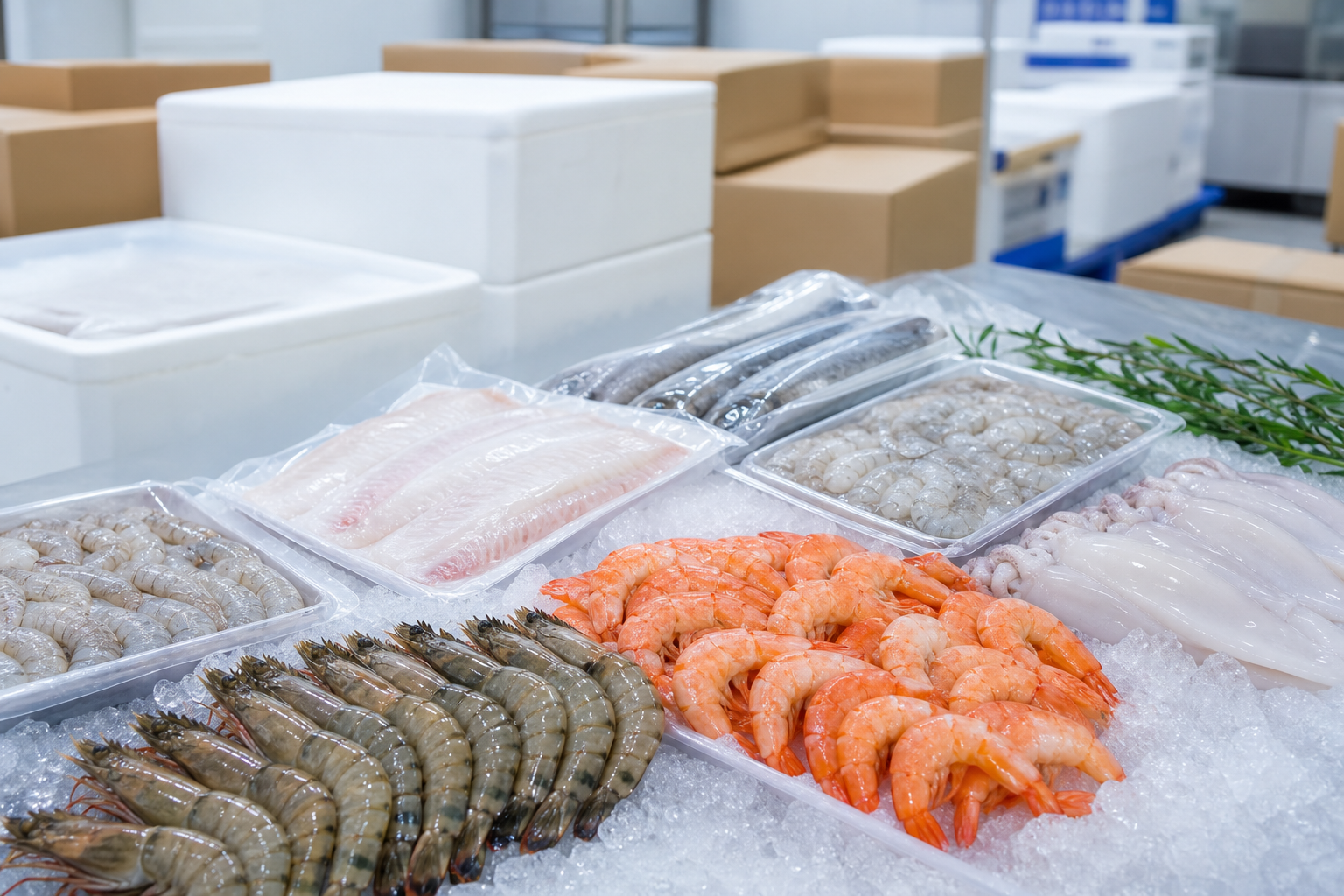
Vietnam seafood sourcing requires more than selecting a species and asking for a price. Frozen shrimp, pangasius, squid and other seafood products differ by processing form, size, net weight, glazing, additives, factory approval, traceability and cold-chain controls.
Green Tech Agri Export acts as a Vietnam-side sourcing representative for overseas buyers. We help define the request, identify potential processors or exporters, compare replies and coordinate early-stage checks. We are not the factory and do not replace the buyer’s importer, laboratory or regulatory adviser.
Vietnam seafood sourcing market update
Vietnam’s seafood exports reached US$1.14 billion in August 2026 and exceeded US$8.0 billion for the first eight months, according to VASEP reporting based on Vietnam Customs data. The cumulative value was up 11.9% year on year. Shrimp remained the largest category at nearly US$3.28 billion, while pangasius reached about US$1.52 billion.
These sector figures demonstrate supply depth, but they do not confirm that any particular processor is approved for a buyer’s destination or can make a requested SKU. The importer must verify the legal manufacturer, establishment approval, product specification and current compliance status for each project.
Define the frozen seafood format first
| Product family | Format examples | RFQ details |
|---|---|---|
| Shrimp | HOSO, HLSO, EZP, PDTO, PTO, PUD, cooked or breaded | Species, count size, origin, shell/tail form, treatment, glaze, net weight and block/IQF format |
| Pangasius | Fillet, portion, steak or value-added item | Trim, size, color, moisture treatment, glaze, net weight, pin bone and packing |
| Squid and octopus | Whole, cleaned, tube, ring, tentacle or cut product | Species, size, cleaning, additives, glaze, block/IQF and cooking requirement |
| Other fish | Whole round, fillet, portion or prepared product | Scientific name, catch/farm origin, gear if relevant, trim, bones, skin and certification needs |
Abbreviations can be interpreted differently by teams. Attach product photos or a benchmark sample and spell out the required processing form. Confirm whether size counts refer to pieces per pound, kilogram or another commercial unit.
Frozen shrimp buyer specification checklist
- Identity: commercial name, scientific name, farmed or wild origin and country of origin.
- Processing: HOSO, HLSO, peeled, deveined, tail-on/off, raw/cooked and IQF/block.
- Size: count range, tolerance and counting method.
- Weight: declared net weight, glaze percentage, deglazing method and packing tolerance.
- Additives: phosphate or non-phosphate, sulfite declaration and buyer-approved treatment.
- Quality: defects, color, odor, texture, broken pieces, dehydration and sensory acceptance.
- Food safety: microbiology, residues and contaminants aligned with the destination and product risk.
- Packing: inner bag, retail bag, master carton, labels, date coding and pallet plan.
Cold-chain checklist from factory to buyer
| Control point | Evidence to request | Buyer question |
|---|---|---|
| Freezing and storage | Process description, warehouse temperature records and product core-temperature criteria | What limits apply to this SKU and how are deviations handled? |
| Container loading | Pre-trip inspection, cleanliness check, loading photos and seal number | Was the container pre-cooled and loading time controlled? |
| Ocean transport | Reefer set point, monitoring arrangement and shipping instruction | Who reviews alarms or temperature deviations in transit? |
| Arrival | Seal check, receiver temperature records and inspection procedure | What is the claim process if carton or product condition is unacceptable? |
| Traceability | Lot code, production date, raw-material source and carton marks | Can the processor trace one shipment lot through production records? |
Do not copy a generic temperature into the contract without checking product, pack, route and buyer policy. The specification should identify the required product temperature, reefer set point, recording method and responsibility for excursions.
Factory approval and destination compliance
The US FDA Seafood HACCP regulation applies to domestic and foreign processors shipping fish and fishery products to the United States. FDA guidance explains that US importers must maintain verification procedures to ensure products were processed in accordance with the regulation. A generic ISO certificate does not replace a seafood hazard analysis or HACCP plan.
For EU-bound seafood, buyers should confirm that the establishment and product route meet EU import requirements and appear on the relevant approved lists where applicable. The responsible importer should verify current approval status, health certification, traceability, residues, labeling and border-control requirements before shipment.
Sample and pre-shipment workflow
- Approve a written specification before requesting samples.
- Evaluate samples using a documented thawing, cooking and net-weight method.
- Confirm the sample is representative of the proposed production line and treatment.
- Review current certificates, establishment details, product label and lot traceability.
- Agree on pre-shipment inspection, laboratory testing, loading evidence and claim process.
- Link the signed specification and approved sample reference to the purchase contract.
How Green Tech supports Vietnam seafood sourcing
We help importers prepare RFQs and screen potential processors for Vietnam frozen seafood. Buyers can also review our product categories, independent sourcing role, working process, market guides and contact page. For shelf-stable food service procurement, see our Vietnam rice sourcing guide.
FAQ about Vietnam seafood sourcing
What should a shrimp importer include in the first RFQ?
Include species, form, size count, raw or cooked condition, freezing method, glaze, net weight, additive policy, pack, volume, destination and required approvals.
Does a food-safety certificate prove US Seafood HACCP compliance?
No single generic certificate replaces the product-specific hazard analysis, HACCP controls and importer verification required by applicable US rules.
Can Green Tech guarantee factory approval?
No. We can help gather and compare current evidence. The buyer and responsible importer must verify the establishment and product against official destination requirements.
Need Vietnam seafood sourcing support?
Send your species, processing form, size, glaze/net-weight requirement, packing, destination and volume. We will help build a supplier-ready sourcing brief.